A Gonur Depe tour introduces the Bronze Age history of Margush, also known as Margiana, in Turkmenistan’s Karakum Desert. The archaeological site is associated with communities that flourished in the ancient Murghab delta around four thousand years ago. It is a rewarding choice for travellers who want to understand the region before its better-known medieval Silk Road cities.
Why Gonur Depe matters
An expedition led by Viktor Sarianidi identified the site in 1972. Research into the settlement and its burial grounds has revealed a society with skilled craftspeople, complex buildings and elaborate funerary practices. The discoveries are important evidence for understanding Bronze Age life in Margiana.
Some interpretations of ancient ritual and religion remain debated. When a guide discusses a building’s purpose or the beliefs of its occupants, it is useful to distinguish excavated evidence from a proposed explanation. The visible remains cannot by themselves confirm every story told about the site.
What to look for during the visit
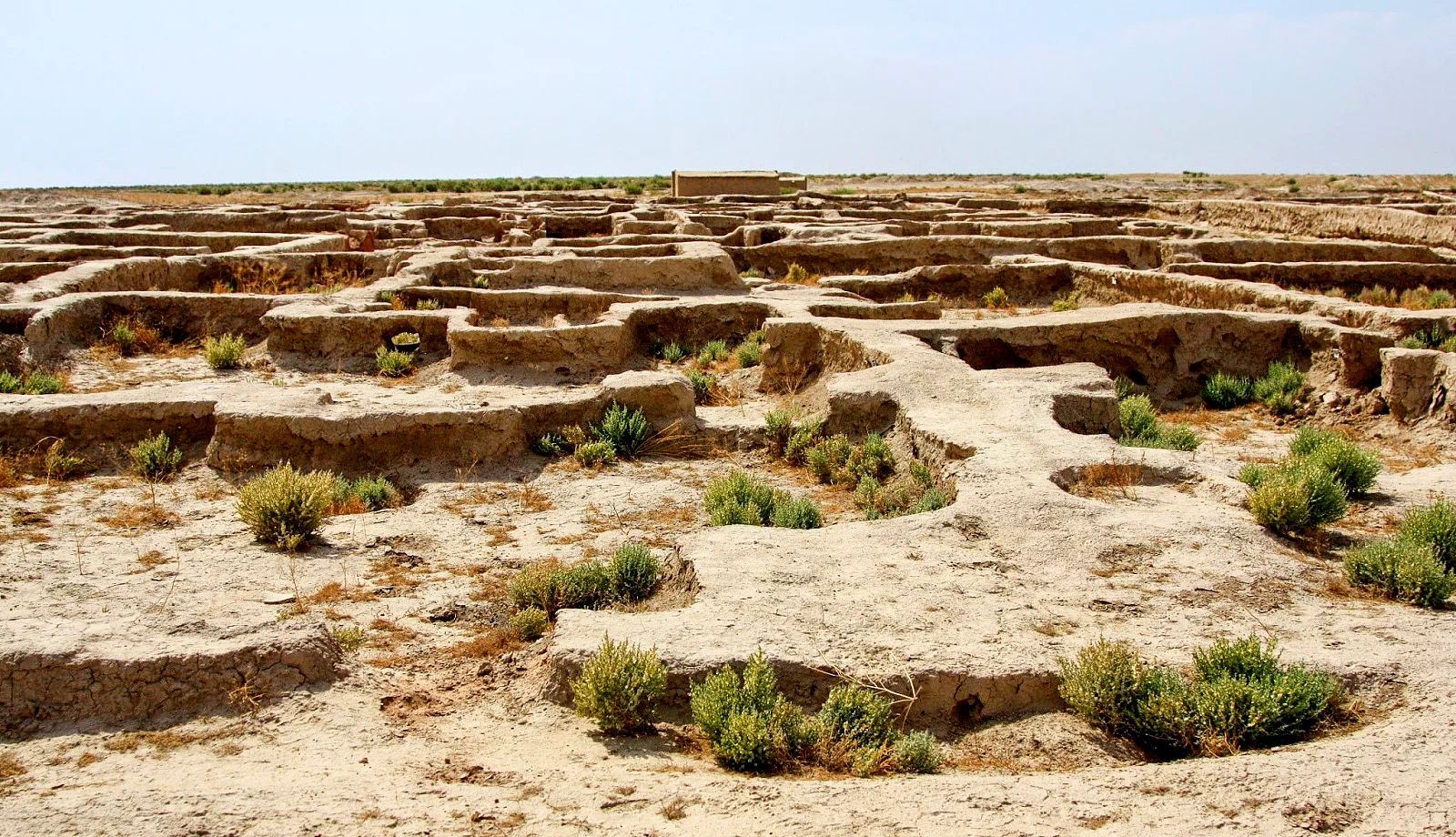
The settlement plan. Examine the arrangement of rooms, passages and surviving walls with a guide. A plan or reconstruction can help connect the fragments on the ground with the larger complex. The experience is about reading an archaeological landscape rather than walking through a fully preserved city.
The necropolis. Excavations have revealed thousands of burials and objects including vessels, ornaments and remains of wheeled vehicles. Some high-status tombs contained valuable materials and mosaic decoration. Ask which areas can be viewed during your visit; findings from a burial do not necessarily remain displayed in that location.
Artefacts in museums. Collections in Mary and Ashgabat help bring the site’s craftsmanship into focus. Finds include small containers made from stone, pottery and metal. If you want a museum visit, agree it separately and check which galleries are available on your dates.
Planning a Gonur Depe excursion from Mary
Arrange a suitable vehicle, a driver familiar with the approach and enough time for the return journey. Ask your organiser about the road conditions, walking terrain and weather before departure. A fixed travel time should not be assumed for every starting point and season.
Compare where each tour starts, which day you visit Gonur Depe and where you can continue afterwards.
5 days: onward to Bukhara
Visit Gonur Depe on day 5, after staying in Mary, then continue via Bayramaly and Turkmenabat to the Farap border for onward travel to Bukhara. Earlier stages include Darvaza, Kunya-Urgench and Merv, with a domestic flight from Ashgabat to Dashoguz.
5 days: onward to Khiva or Nukus
Visit Gonur Depe on day 3 from Mary, then return by road to Ashgabat. The route continues to Darvaza and Kunya-Urgench, ending on day 5 at Shavat for Khiva or Urgench, or Hojaili for Nukus. This itinerary travels by road.
9 days: return to Ashgabat
A circular journey combining Gonur Depe with Merv, Yangykala, Nokhur, Kunya-Urgench and Darvaza. Visit Gonur Depe on day 6 from Mary, then drive back to Ashgabat for the overnight train to Dashoguz. The tour finishes in Ashgabat.
13 days from Khiva to Bukhara
Enter Turkmenistan at Shavat on the Khiva side. Visit ancient Merv on day eight and stay overnight in Mary. On day nine, travel from Mary to Gonur Depe, then take the night train to Kerki. The route continues to the Koytendag mountains before the Farap crossing for Bukhara.
Before booking: the Gonur Depe visit involves an off-road approach and a long onward journey on these itineraries. Confirm the vehicle, current road conditions and pace with us. Check flight or train arrangements for your dates and whether the transfer on the Uzbek side of the border is included.
Gonur Depe and Ancient Merv
The two destinations offer different historical perspectives. Gonur Depe focuses on Bronze Age Margiana, while Ancient Merv is known for its sequence of historic cities and major medieval monuments. Each requires its own time and transport arrangements.
What to bring and how to visit responsibly
Carry drinking water, sun protection and a hat, and wear sturdy shoes for uneven ground. Check the weather and discuss any mobility needs before booking. Stay within the areas permitted by site staff, avoid climbing the walls and leave all archaeological material in place.
To arrange an archaeological itinerary, contact Darwaza Travel with your dates, group size and preferred departure point. Mention any specific interests, such as architecture, burial practices or museum collections.
Sources: the Turkmen state news agency on archaeological research, the Gonur Depe necropolis and museum artefacts.