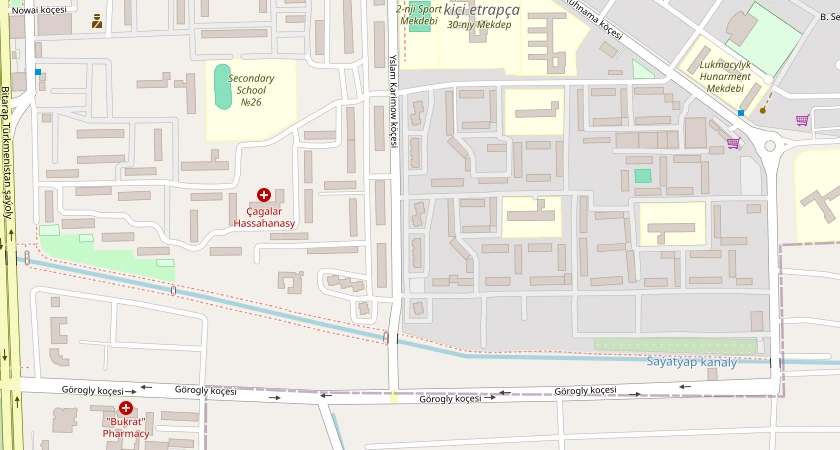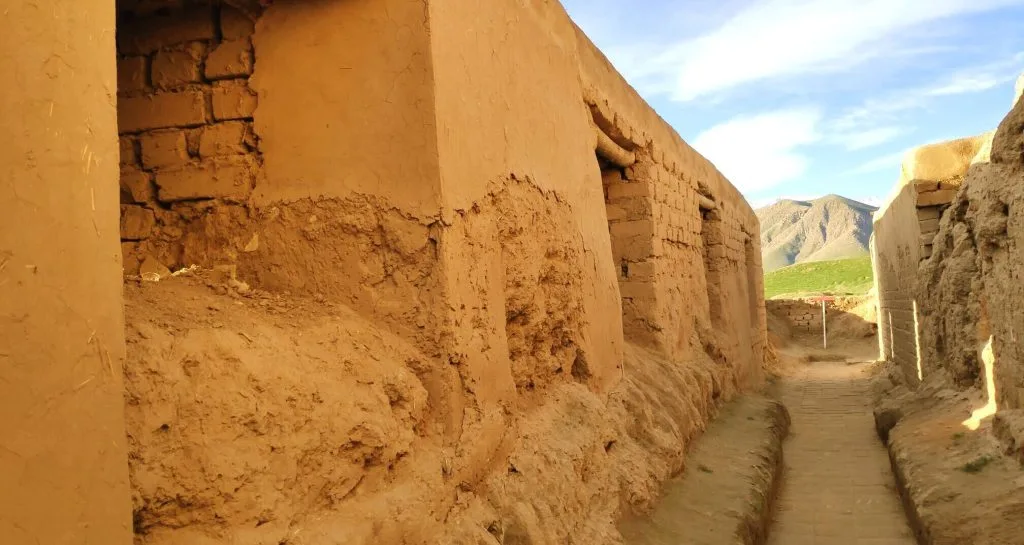
New Nisa is an ancient city site near Bagyr and Ashgabat in Turkmenistan. Its story extends beyond the Parthian period, following a settlement that changed through many later centuries. It offers an additional perspective for travellers interested in archaeology and the history of the Nisa area.
New Nisa and Old Nisa: what is the difference?
The names do not describe a simple sequence in which the “new” city replaced the “old” one. Evidence of settlement at New Nisa predates the monumental complex now called Old Nisa. Urban life at New Nisa also continued much longer, into the early nineteenth century.
Old Nisa is particularly known for its Parthian monumental architecture and art discoveries. New Nisa reveals a longer sequence of urban occupation and later historical layers. Both sites belong to the UNESCO World Heritage property “Parthian Fortresses of Nisa”, inscribed in 2007.
If your main interest is the ancient halls and ivory rhytons, start with our Old Nisa visitor guide. Allow separate time for New Nisa if you would like to explore the wider history of the city.
A brief history of New Nisa
The settlement existed before Parthia’s rise and developed into a substantial city during the Parthian period. Its later history included decline, rebuilding and renewed occupation. It would be misleading to describe fifteen centuries of uninterrupted prosperity.
In the medieval period Nisa belonged to the historic region of Khorasan and developed under the Seljuks in the eleventh and twelfth centuries. Subsequent conflicts repeatedly affected the city. Archaeological finds from different periods, including ceramics and later buildings, help reconstruct this changing history.
What to expect at the archaeological site
Descriptions of New Nisa identify remains of fortifications, towers and a surrounding ditch. A plan and explanation of the terrain can help you understand the city’s boundaries. Not all features are excavated or easy to recognise on the surface.
This visit is particularly suited to people who enjoy interpreting an archaeological landscape. Ask a guide to explain which periods are represented in the areas that can be seen. Do not expect intact residential streets or a preserved ancient market quarter.
Arranging an excursion from Ashgabat
Check that your programme specifically includes New Nisa. Visiting Old Nisa does not automatically mean a stop at the second site. Agree the approach, access arrangements, walking route and time available with your organiser.
Bring water, sun protection and shoes suitable for uneven terrain. Discuss the pace and walking distances in advance. Follow local instructions, stay off ancient walls and towers, and leave any archaeological material where you find it.
How to include both Nisa sites
When contacting Darwaza Travel, explain whether you want a general introduction to Nisa or a more detailed archaeological excursion. Ask for the two sites and any museum visit to be listed separately in the agreed programme.
Sources: UNESCO and the Turkmen state news agency’s accounts of research at New Nisa and the history of the two city sites.