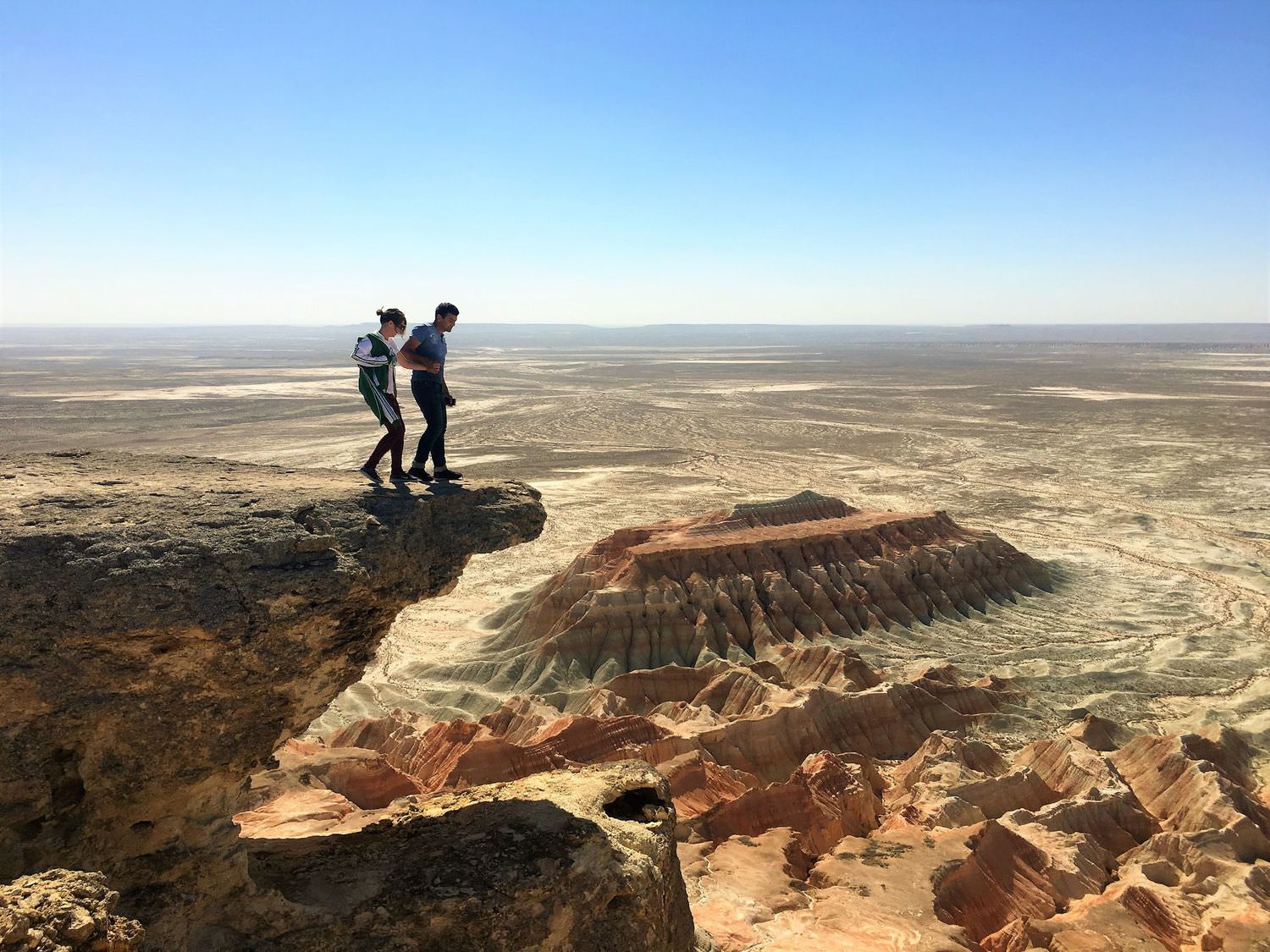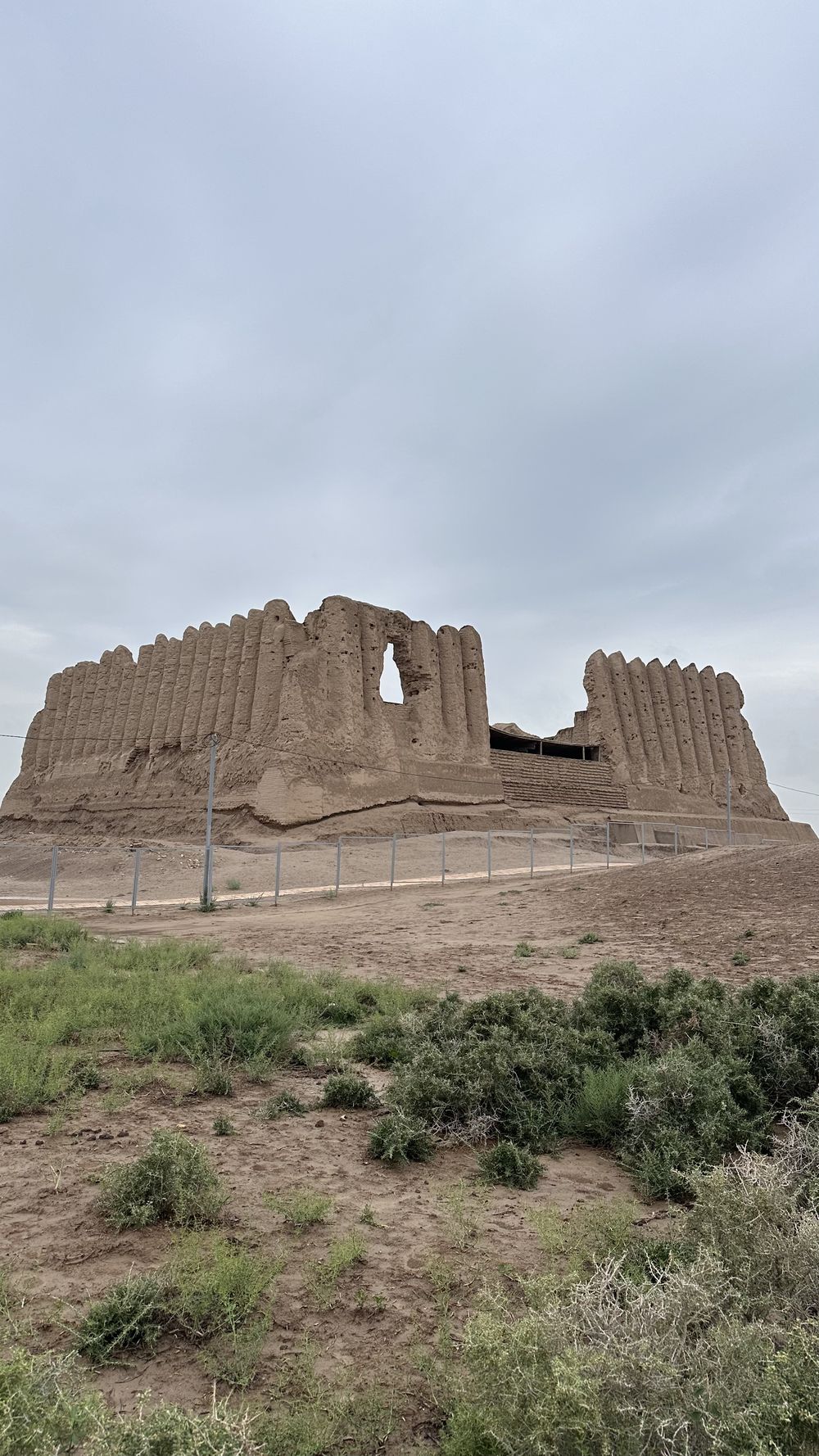
In the very centre of the boundless and unforgiving Karakum Desert, where the scorching sand merges with the horizon and the searing wind sings its eternal songs, lies a phenomenon that has no equal on the entire planet. This is Darvaza. To scientists, it is a gas crater, the result of a technogenic accident. To the locals, it is a cursed place. To millions around the world, it is the ‘Gates of Hell’.
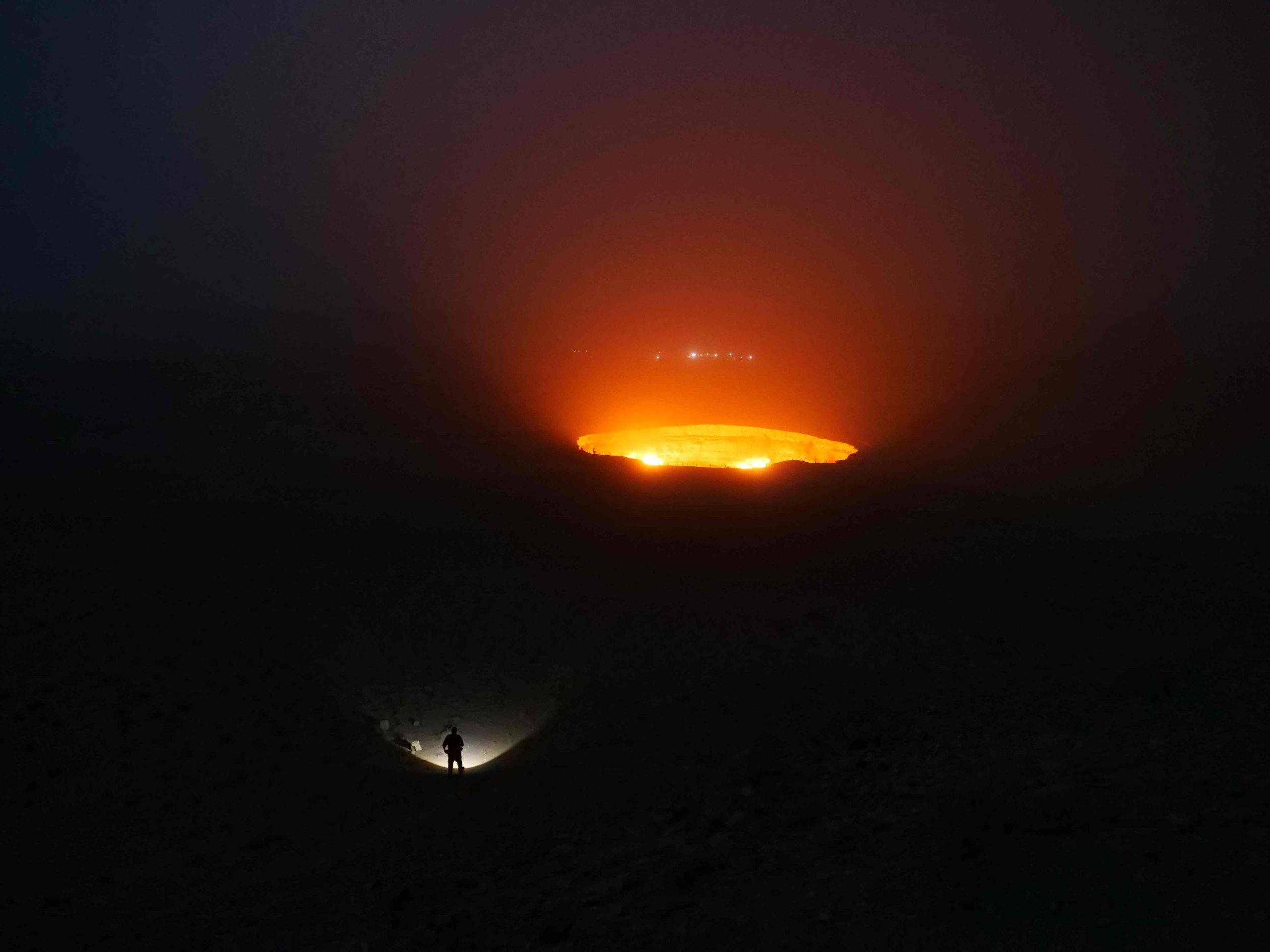
Imagine an utterly dark desert night. Around you, there is not a single light of civilisation for hundreds of kilometres. Suddenly, a crimson glow appears on the horizon. At first, it seems like a distant fire, but as you draw closer, you realise that the earth has quite literally split open, and from its depths erupts an unquenchable, roaring flame. It is a sight that paralyses the will, makes the heart beat faster, and forever alters one’s perception of the power of the elements.
Part 1: Anatomy of a Catastrophe — How the Gates Opened
The history of Darvaza is a unique blend of geological chance and a dramatic error of human judgment. To understand how this flame appeared, we must return to 1971, to the era of great Soviet geological explorations.
Soviet Geologists and the Fateful Drill
Turkmenistan has always been known for its colossal reserves of natural gas. Groups of Soviet geologists scoured the Karakum in search of promising deposits. Near the small settlement of Darvaza (which means ‘gate’ in Turkmen), a drilling rig struck an underground cavern—a vast void filled with gas.
At a certain moment, the ground could not support the weight of the equipment. A massive collapse occurred. The drilling rig, transport, and all the gear vanished underground in seconds. Fortunately, no lives were lost, but in place of the drilling site, a giant hole appeared, approximately 70 metres in diameter and 20 metres deep.
A Decision That Became Eternity
Natural gas began to erupt from the newly formed crater with immense force. This posed a deadly threat: toxic fumes could poison the surroundings, killing livestock and the inhabitants of the nearby village. The geologists made a decision that seemed logical and standard for those years: to set the gas alight.
The specialists calculated that the gas reserves in this specific cavern were small and that the torch would burn out in a week, perhaps two at most. But nature laughed at human calculations. Weeks, months, years passed… then decades. The Darvaza flame has not gone out for over 50 years. According to modern expert estimates, the crater is fed by a colossal underground reservoir, and there is enough gas there to last for many years to come.
Part 2: Geography of Terror and Beauty — A Gaze into the Abyss
When you stand on the edge of the crater, your senses are subjected to an incredible ordeal.
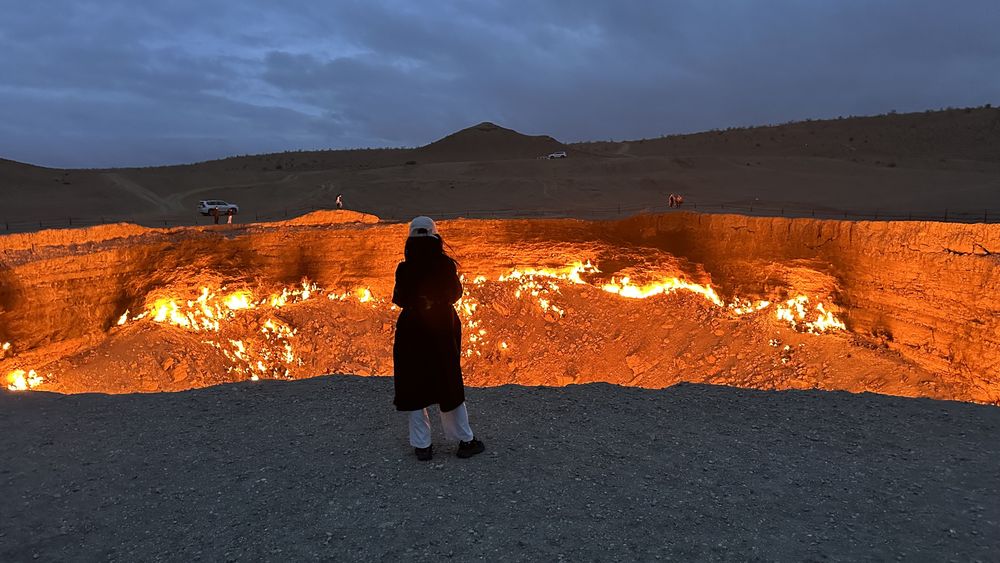
- Scale and Heat: The diameter of the crater is comparable to the size of a football pitch. Even at a distance of 20–30 metres from the edge, the heat becomes unbearable, searing the skin on your face. Inside the crater, hundreds of tongues of flame erupt from beneath collapsed layers of earth. Some reach heights of 10–15 metres.
- The Roar of the Underworld: Darvaza is not the quiet burning of a campfire. It is a constant, low, vibrating hum, much like the sound of a jet engine. The ground beneath your feet feels alive and groaning.
- Atmosphere: The air above the crater shimmers with a heat haze. In the evening, as the sun sets, the light from Darvaza is visible from space. Within a one-kilometre radius of the crater, the night becomes as bright as day, bathed in a haunting, orange-red light.
Part 3: Mysticism and Folk Beliefs
Despite the scientific explanation, Darvaza quickly became shrouded in a mystical aura. The desert does not forgive mistakes, and the appearance of such a ‘monster’ in its heart could not escape the attention of folk storytellers.
Djinns and Fire Spirits
Local nomads tell that the crater opened not because of a drill, but because humans disturbed an ancient sanctuary of fire djinns. They say that at night, shadows emerge from the flames and wander around the crater. This is why the elders advise against approaching the Gates of Hell alone.
Sacrifices of the Crater
There are many stories of birds and insects that, attracted by the bright light at night, fly by the thousands into the flames and perish. To a mystically inclined observer, this looks like a sacrifice that the desert demands from living creatures to maintain its eternal pyre.
Part 4: Scientific Expedition to Hell — The Feat of George Kourounis
For a long time, it was believed that life inside the crater was impossible due to temperatures reaching 400–500 degrees Celsius and the lack of oxygen in favour of methane. However, in 2013, Canadian explorer and traveller George Kourounis accomplished what seemed like a suicide mission.
Descent to the Bottom
Supported by National Geographic, a unique expedition was organised. Kourounis, clad in a special heat-reflective suit made of Kevlar and aluminium, equipped with a specialized breathing apparatus, descended to the very bottom of the Darvaza crater.
- The Goal: To find life. It seemed impossible—what life could exist in such flames?
- The Sensation: On the bottom of the crater, unique extremophile bacteria were discovered. They thrived in the ultra-high temperatures and low-oxygen atmosphere. These organisms are found nowhere else on the surface of the Earth. This discovery gave scientists hope that life could exist in similar conditions on other planets, such as Mars or the moons of Jupiter.
Part 5: Darvaza — A Global Tourist Magnet
Today, Darvaza is the most recognisable tourist brand in Turkmenistan. People from every corner of the globe travel here to experience a primal sense of awe.
Camping at the Edge of the Abyss
The best (and only proper) way to see Darvaza is to visit for an overnight stay.
- Sunset: As the sun slowly sinks into the Karakum sands, the crater begins to glow brighter. The crimson of the sky merges with the fire of the earth.
- The Night: This is the time of true magic. Tourists set up camp in tents at a safe distance. Cooking dinner over a campfire while gazing at the ‘Gates of Hell’ is an experience that is impossible to forget.
Dawn: In the morning, the flames seem less bright but more treacherous. The crater is shrouded in a mist, and the sand around it turns a ghostly ash-grey.