If you once thought that the history of great civilisations was limited to Egypt, Mesopotamia, India, and China, then the sands of the Karakum are ready to present to you the Fifth Civilisation of the world. Welcome to Gonur Depe — the “Grey Mound,” the heart of the legendary land of Margush (or Margiana), which four thousand years ago stood as one of the most advanced centres of humanity.
This is not merely an archaeological site. It is a place that compelled scholars to rewrite the textbooks of world history. Here, in the ancient bed of the Murghab River, archaeologists led by the legendary Viktor Sarianidi discovered what seemed impossible: a vast capital city with palaces, temples, and sophisticated rituals, flourishing between 2300 and 1600 BC.
Part 1: Bronze Age Geopolitics — The Land of Margush
In those days, when pyramids were being raised in Egypt and the first laws were being inscribed in Babylon, the Bactria-Margiana Archaeological Complex (BMAC) was thriving on the territory of modern Turkmenistan.
Gonur Depe was the capital of this state. Imagine: amidst today’s silent sands, lush forests once rustled, and the mighty Murghab River carried its waters across a broad plain. Gonur sat at the centre of a vast oasis, linked by trade routes to the Indus Valley in the east and Elam in the west. It was here that the interests of the ancient world’s great powers intersected, making Margush the “technological hub” of its time.
Part 2: Architecture of Power — The City as a Labyrinth
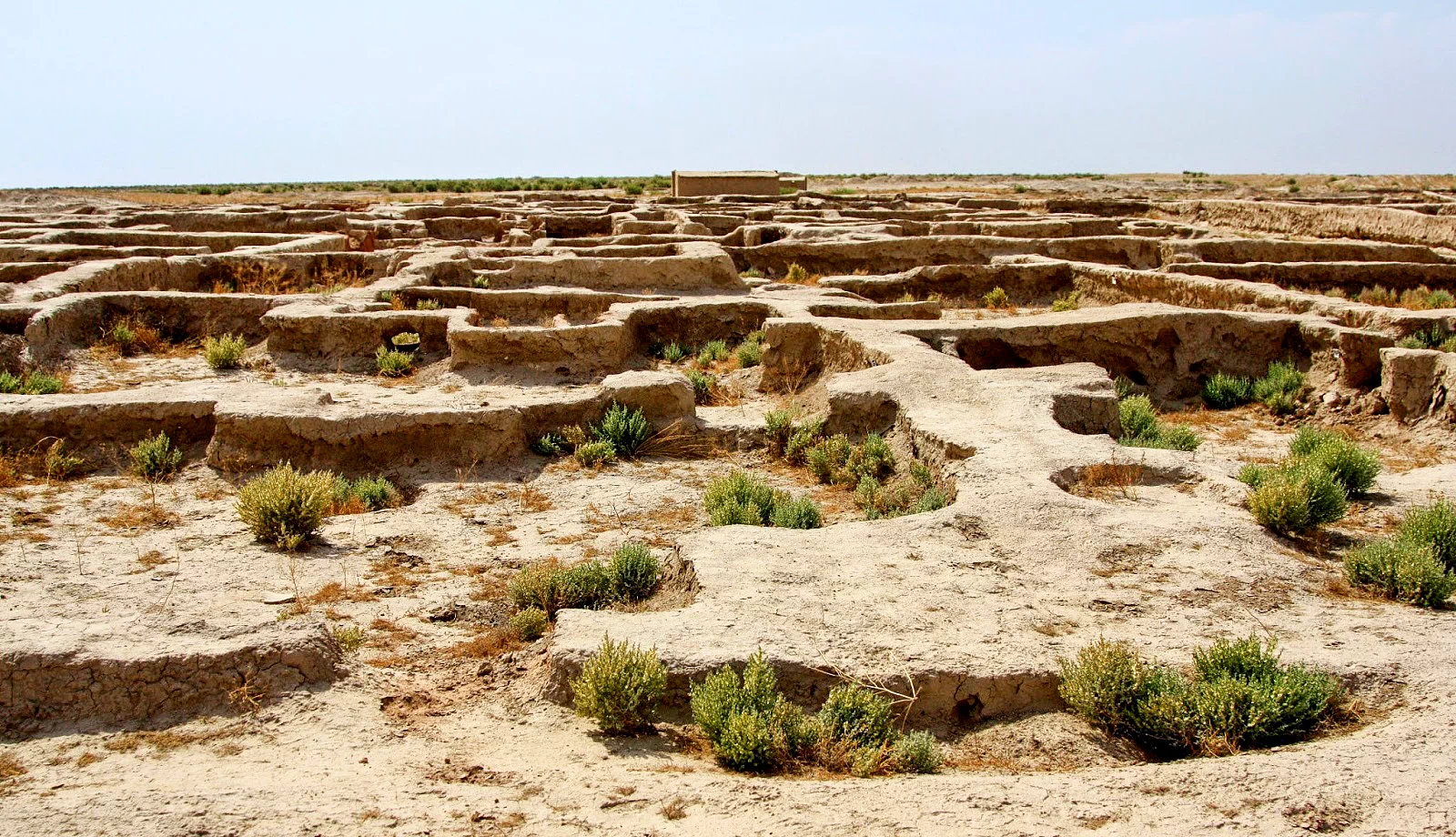
Gonur Depe is a triumph of Bronze Age engineering. The area of the entire temple and palace complex spans some 50 hectares.
The Citadel and the Kremlin
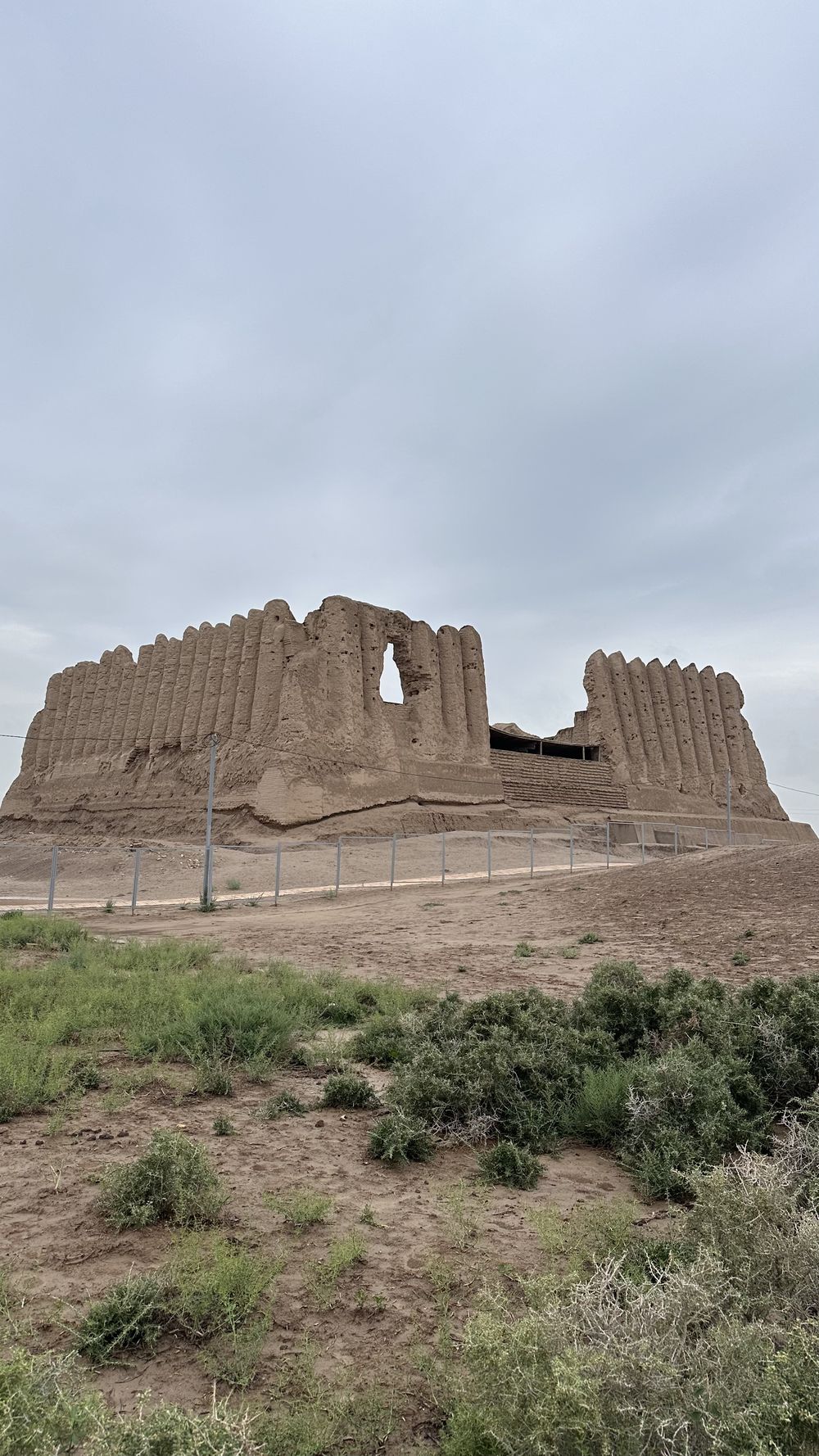
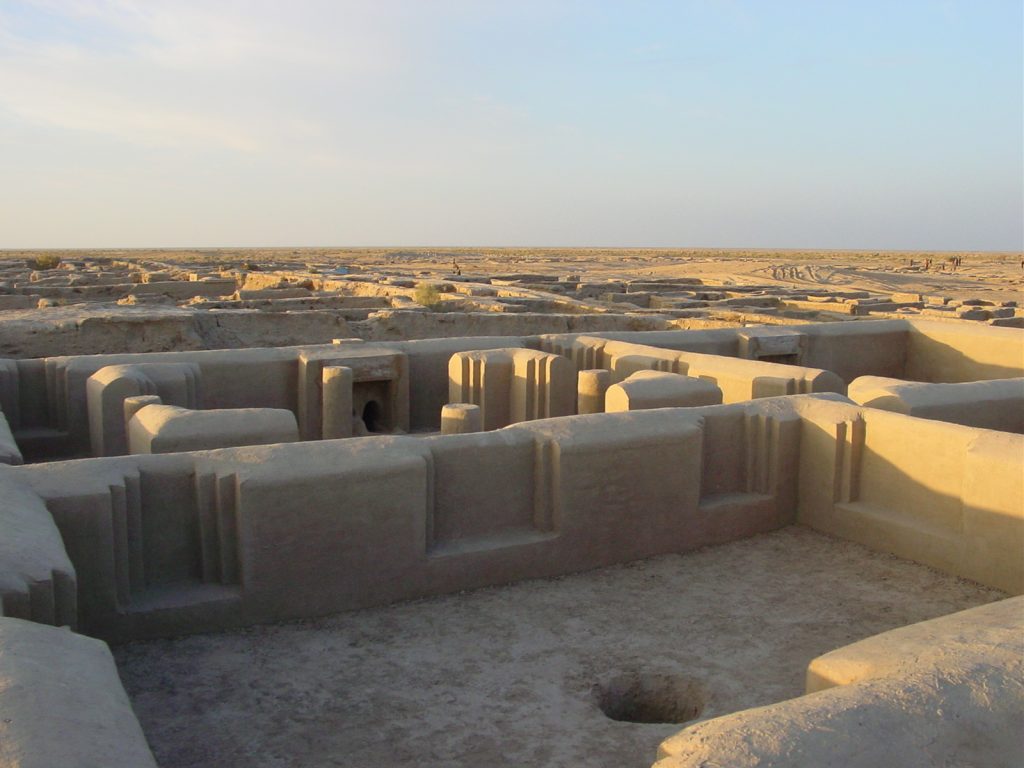
At the heart of Gonur rose a formidable citadel, protected by walls up to 6 metres thick with massive defensive towers. Within these walls lay the Ruler’s Palace — a complex labyrinth of corridors, chambers, and internal courtyards.
- Symmetry and Planning: The city was built according to a rigorous plan. Every wall and every passage held sacred significance. Archaeologists are struck by the precision of the right angles and the quality of the brickwork, which has remained in the earth for 4,000 years whilst retaining its form.
- Ancient Plumbing: A unique system of drainage and ceramic pipes was unearthed at Gonur. The capital’s residents enjoyed running water and sewage systems at a time when much of humanity still lived in primitive huts.
The Temple of Fire and the Temple of Water
Gonur was a sacred city, home to grand temple complexes. In the Temple of Fire, scholars found altars where an eternal flame burned thousands of years ago. The Temple of Water consisted of enormous brick-lined basins where ritual ablutions were performed.
Part 3: Secrets of Soma and Haoma — The Cradle of Zoroastrianism?
One of Viktor Sarianidi’s most intriguing hypotheses was that the origins of Zoroastrianism — one of the world’s oldest religions — were born right here in Gonur Depe.
- The Secret Drink of the Gods: Within the temples of Gonur, special vessels were found containing traces of cannabis, poppy, and ephedra seeds. Research suggests that the sacred drink Soma (or Haoma), mentioned in the Rigveda and the Avesta, was prepared here. The priests of Gonur used it to enter trances and commune with spirits.
- Veneration of the Elements: The entire lifestyle of the Gonur people — the cult of fire, the sanctity of water, and a profound respect for animals — is incredibly close to the tenets of the faith of the Prophet Zarathustra. It is possible that from here, these ideas spread to Persia and India.
Part 4: Treasures of Margush — Timeless Craftsmanship
The excavations at Gonur Depe have gifted the world artefacts worthy of the Louvre or the Hermitage.
- Mosaic Panels: The royal tombs of Gonur yielded the first narrative mosaics in human history. Crafted from minute slivers of stone and bone, they depict mythical griffins, battling beasts, and ritual scenes. The level of detail is such that they appear to be the work of modern masters.
- Silver and Gold Vessels: Exquisite goblets featuring repoussé work of walking camels and mountain goats.
- Amulet Seals: Stone seals engraved with unique hieroglyphs that remain undeciphered to this day. This suggests that the Gonur people possessed their own system of writing or symbolic information transfer.
Part 5: The Royal Necropolis — Death as the Start of a Journey
The burial rites of Gonur are striking in their luxury and… strangeness. In the “Royal Necropolis,” archaeologists found tombs that looked like actual houses for the dead — complete with furniture, vessels, and even chariots.
- Chariots and Horses: The people of Gonur were among the first to use chariots. In the graves of the nobility, remains of wooden wheels with bronze rims were found.
- Animal Burials: Unique burials of lambs and even dogs were found at Gonur, interred with honours as faithful protectors.
Part 6: The Tragedy of the Exodus — Where Did the People Go?
Around 1600 BC, life in Gonur Depe began to fade. This was not caused by war or pestilence, but by ecology. The Murghab began to shift its course, moving further west. The oasis began to wither, and the sands of the Karakum commenced their relentless advance.
The people did not perish — they departed. They gathered their belongings, took their most precious items, and abandoned their beautiful palaces. It is believed that the descendants of Gonur migrated to the foothills of the Kopetdag and further into India and Iran, carrying with them knowledge of construction, medicine, and religion. The sands swallowed the city for 3,500 years, preserving it for us in almost its original state.
A Practical Guide for the Modern Traveller
A journey to Gonur Depe is an expedition in every sense of the word. There are no hotels or paved roads here.
- Getting There: The city is located approximately 80 km from the modern city of Mary. The route lies through the deep sands of the Karakum. You will require a well-prepared 4×4 vehicle and an experienced driver who knows the desert trails.
- What to Bring: A supply of water, a hat, and sunglasses are essential. The desert sun is extremely fierce.
- When to Visit: It is best to go in April or May, when the desert is in bloom and the heat is not yet exhausting, or in October.
- The Experience: Standing in the centre of a palace where a king received ambassadors 4,000 years ago, you will feel a physical connection across the ages. Here, time does not merely flow — it stands still.
A Tip from the Guide: Watch the walls of the citadel at sunset. The clay takes on a reddish-golden hue, and in that moment, it is easy to imagine priests in white robes walking these corridors, while sacred fire breathed incense in the temples.
🏆 Quiz from “The Great Book”:
Archaeologists found many stone and terracotta figurines at Gonur Depe. One of the most famous is a stylised female figure without a face, which scholars call the “Margiana Madonna.” Do you know what this figurine symbolised and why it was never depicted with eyes or a mouth? (Hint: It relates to ancient beliefs that evil spirits could seize the soul of an idol through its face).